Guides · 2026-10-16
How PlaceFit scores a place (and why your score differs from everyone else's)
PlaceFit compares towns, villages and postcodes against your own priorities using dated official data. Here is exactly how a comparison is built, and what it does not tell you.
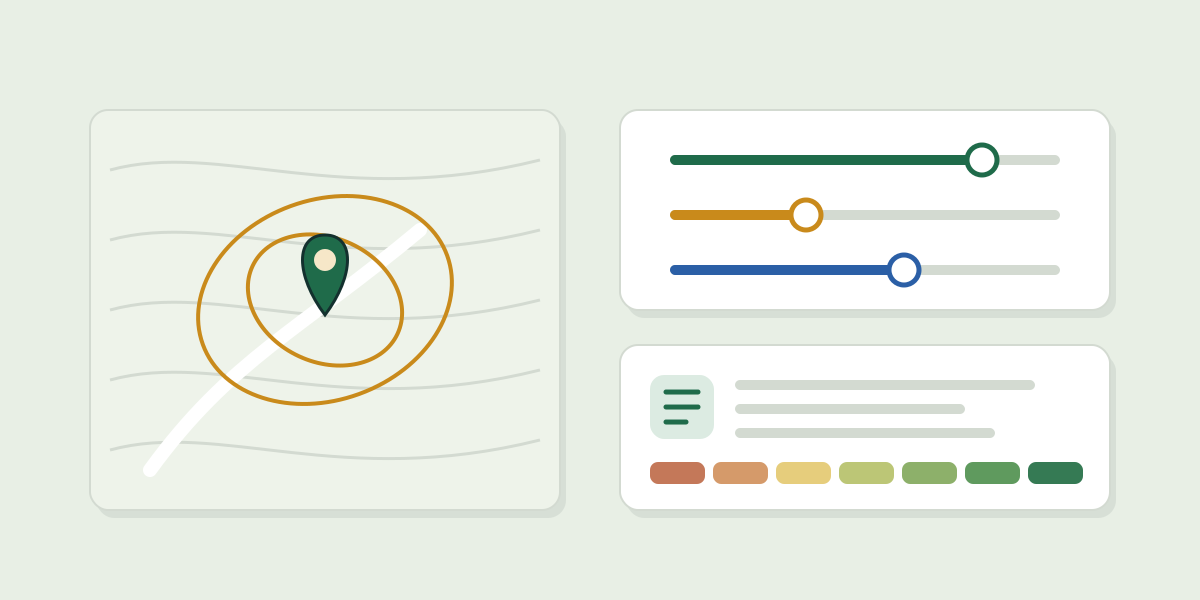
Most "best places to live" lists are one editor's idea of a good place. PlaceFit works the other way round: you say what matters to you, and any postcode in England, and every town and village we cover, is compared against that.
Step by step
- Measure. For each place we take the area within about 3 km of its centre and measure it from official sources: recorded crime from police.uk, schools from the Department for Education, bus stops from NaPTAN, GP surgeries from NHS England, broadband from Ofcom, flood risk from the Environment Agency, green space from Ordnance Survey, and more.
- Show the real figure. Each measure is shown as what was actually counted, such as recorded crimes per 1,000 residents or the share of nearby postcodes at flood risk, with the period it covers, the area it was measured over and its source.
- Compare. Each figure is set beside nearby places and the picture across England, so you can see whether it is high, low or typical.
- Weight. Your answers and priorities decide how much each measure counts when places are compared for you. A retired couple and a family with three children get different results for the same village.
- Leave gaps as gaps. If we have no figure for something in a place, it is left out and named as missing, not filled in with an average or a guess. The one estimate we show, recorded crime where police.uk has too few street-level records (Greater Manchester and some Gloucestershire councils), is labelled as an estimate with its method.
Each place also gets an overall letter grade on one scale, from A+ (exceptional) through A, B+, B, C+ and C to D (poor). It is built from the weighted measures, so it follows your own priorities, and it is shown on Compare with the priorities it was graded on.
What it does not tell you
PlaceFit describes an area, not a street or a house. It is not a prediction of what living there will feel like, and it is not property or financial advice. Visit, walk the streets at the times you would travel, and check school admissions and flood risk for the exact address. Exploring places is free; ranked matches across many places need a PlaceFit Pass.